I looked through the peephole.
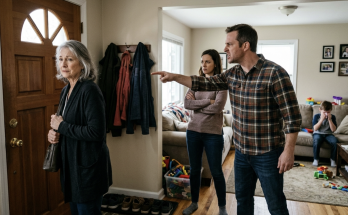
Ryan was standing in the hallway wearing an expensive jacket, holding his briefcase in one hand. His face was red, and he looked nothing like the confident man who had sat in the attorney’s office pretending he already owned everything Grandpa had left.
I unlocked the door but kept the security chain attached.
“What?”
His expression changed.
“Are you seriously keeping me outside?”
“You came here shouting. I don’t think we need to make this a family visit.”
He stared at me for several seconds.
Then his voice became quieter.
“Listen, Mark. You’re making a huge mistake.”
I said nothing.
“Dad is furious. Emma is furious. The whole family thinks you’re being ridiculous.”
“That’s unfortunate.”
“Don’t get smart with me.”
He stepped closer to the doorway.
“Grandpa’s estate is complicated. You don’t understand how much work is involved. The taxes, maintenance, property expenses, insurance. That cabin alone could become a financial burden.”
I almost smiled.
It was interesting how quickly the cabin had changed from something that supposedly belonged to the family into a financial burden.
“You seemed pretty interested in managing it when you wanted me to sign it over.”
Ryan rolled his eyes.
“That’s exactly what I’m talking about. You hear one thing and turn it into some personal attack.”
“Then explain the transfer agreement.”
He paused.
“What about it?”
“Why was it already prepared before the will reading?”
His jaw tightened.
“Because we knew what Grandpa wanted.”
I looked directly at him.
“No. The attorney told us exactly what Grandpa wanted.”
Ryan shook his head.
“Grandpa wasn’t thinking clearly toward the end. You know that.”
Something inside me went cold.
I remembered Grandpa sitting at his kitchen table, carefully reading the newspaper without his glasses because he insisted he could still see perfectly.
I remembered him explaining the property taxes on the cabin.
I remembered him showing me how to shut off the water before winter and how to check the roof after a storm.
He had been perfectly capable of explaining every detail of that property.
And Ryan had barely visited him during those final months.
“Don’t talk about Grandpa like that,” I said.
Ryan gave a frustrated sigh.
“I’m trying to help you.”
“No. You’re trying to get me to sign something.”
For the first time, he seemed to realize that the conversation wasn’t going the way he had expected.
His expression hardened.
“Fine. I’ll be honest with you.”
He lowered his voice.
“Dad needs that property.”
I frowned.
“Why?”
“Because the family has expenses. There are things you don’t know about.”
“Then Dad can explain them.”
Ryan looked down the hallway before speaking again.
“His business hasn’t been doing well. He has some debts. The cabin is valuable, and selling it would solve a lot of problems.”
I stared at him.
There it was.
Not family tradition.
Not responsibility.
Not even a concern about Grandpa’s wishes.
Money.
“How much debt?”
“That’s none of your business.”
“Then the cabin isn’t either.”
Ryan’s face changed immediately.
“You really think you can talk to me like that?”
“I think I can decide what happens to property that was left to me.”
He stepped backward and laughed bitterly.
“You’re going to regret this.”
Then he turned and walked toward the elevator.
Before disappearing, he looked over his shoulder.
“And don’t think this is over.”
I closed the door.
This time, I locked both locks.
For several minutes, I stood there listening to the elevator descend.
My hands were shaking, but I wasn’t afraid.
I was angry.
Not because Ryan had threatened me.
Because even after everything Grandpa had done for me, my family still believed that my only purpose was to make their lives easier.
That night, I called the estate attorney again.
His name was Mr. Collins.
He had handled Grandpa’s legal affairs for years, and he was one of the few people who had treated me like an adult rather than someone who needed to be managed.
When he answered, I explained what had happened.
He listened without interrupting.
Then he said something that made me sit upright.
“Mark, I was actually going to call you tomorrow. There’s something else you should know.”
My stomach tightened.
“What is it?”
“I reviewed the documents your brother brought to the estate meeting.”
“And?”
“They contain several concerning provisions.”
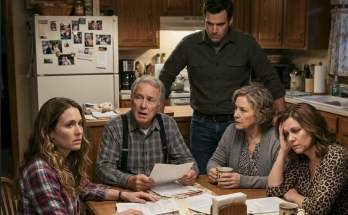
I walked over to my kitchen table and sat down.
“What kind of provisions?”
Mr. Collins paused.
“The agreement doesn’t simply transfer ownership of the cabin. It also includes language giving your brother authority over certain financial matters connected to the property. More importantly, it contains a clause that could affect your ability to challenge the transfer later.”
I felt my chest tighten.
“So they wanted me to sign away more than the cabin?”
“Potentially, yes. I strongly advise you not to sign anything prepared by your family without independent legal review.”
I rubbed my forehead.
“Did Grandpa know they might try something like this?”
Mr. Collins was quiet for a moment.
Then he said, “Your grandfather discussed this possibility with me.”
I stopped moving.
“What?”
“He specifically asked me to make sure you understood that the cabin was yours. He also instructed me not to allow anyone to pressure you into transferring it.”
I looked toward Grandpa’s letter on the table.
“What else did he say?”
Mr. Collins took a breath.
“He left another document with me. It wasn’t part of the ordinary will reading because it contains private instructions relating to the estate.”
My heart started beating faster.
“Private instructions?”
“Yes. I believe it’s time you came to my office.”
I agreed to meet him the following morning.
That night, I barely slept.
I kept thinking about the transfer agreement, Ryan’s strange explanation, and Dad’s financial problems.
For years, I had believed my family simply preferred Ryan and Emma.
Now I was beginning to wonder whether something much bigger had been happening behind my back.
The next morning, I arrived at Mr. Collins’s office at nine.
He had already prepared a folder.
There were several documents inside, including copies of property records, financial statements, and a sealed envelope with my name written across the front.
The handwriting was unmistakable.
Grandpa’s.
I picked it up carefully.
“Is this another letter?”
“Yes,” Mr. Collins replied. “Your grandfather asked me to give it to you after the will reading, once you had been informed of your inheritance.”
I opened it.
The letter was shorter than the first one.
But the words affected me more deeply.
Dear Mark,
If you are reading this, then I imagine your brother has already made you an offer that sounds generous but leaves you with less than I intended.
I know my family. I know how easily people can convince themselves that something belongs to them simply because they want it.
The cabin is yours because you understood what it meant to me.
It was never just a building. It was the place where I could sit quietly, watch the lake, and remember the life I had worked so hard to build.
You never asked me for anything when you visited. You brought groceries when you thought I needed them. You fixed things without asking for payment. You listened when I needed someone to talk to.
I noticed all of it.
I also know that you have spent much of your life feeling as though you were less important than your brother and sister.
You were never less important, Mark.
Never.
Please don’t confuse being a good person with allowing people to take advantage of you.
Love, Grandpa.
I stopped reading.
My eyes were burning.
I folded the letter and placed it carefully on the desk.
Mr. Collins waited until I looked up.
“Your grandfather wanted you to understand something,” he said.
“What?”
“He didn’t leave you the cabin because he thought you needed money. He left it because he wanted you to have something that belonged entirely to you.”
I nodded slowly.
Then I noticed another document in the folder.
It was a financial summary.
“What is this?”
Mr. Collins turned the page toward me.
“This concerns your grandfather’s property.”
I started reading.
The cabin had no outstanding mortgage.
The property taxes were current.
There was also a separate maintenance account containing enough money to cover several years of ordinary expenses.
I looked up.
“So the cabin isn’t the financial burden Ryan described?”
“Not according to these records.”
“Then why did he say selling it would solve Dad’s problems?”
Mr. Collins folded his hands.
“That is something you may need to ask your father.”
I stared at the financial summary.
Then I noticed another line.
A substantial amount of money had been transferred out of one of Grandpa’s accounts several months before his death.
The amount was $48,500.
I read it twice.
“Where did this money go?”
Mr. Collins leaned forward.
“That is one of the reasons your grandfather became concerned.”
I felt my stomach drop.
“Was it stolen?”
“I don’t want to make an accusation without reviewing all the records. However, the transfer was made to an account associated with a company your brother manages.”
I couldn’t speak.
Ryan.
My brother.
The same person who had spent the last several days telling me that I was selfish for refusing to give him Grandpa’s cabin.
I stared at the document.
“Did Grandpa know?”
Mr. Collins nodded.
“He discovered the transfer himself. He contacted me shortly afterward.”
“Why didn’t he confront Ryan?”
“He wanted to understand exactly what had happened before taking action. He was also concerned about creating unnecessary conflict while he was still alive.”
I felt sick.
All those times Ryan had said he was too busy to visit Grandpa.
All those times he had complained that Grandpa was becoming difficult.
All those times he had insisted that someone needed to manage Grandpa’s affairs.
I had assumed he was simply being insensitive.
Now I wondered what he had really been doing.
“Is there more?” I asked.
Mr. Collins opened another folder.
“Yes.”
He placed a copy of an email on the desk.
It was dated several weeks before Grandpa’s death.
The sender was Ryan.
The recipient was Dad.
The subject line read:
Cabin and Estate Plan.
I stared at it.
“Why do you have this?”
“Your grandfather provided it to me after receiving it accidentally. He believed it was important to preserve.”
My hands felt cold as I began reading.
The email discussed the possibility of selling the cabin after Grandpa’s death.
Ryan wrote that I would probably be easy to convince because I had always avoided arguments.
He suggested presenting the transfer as a family arrangement rather than an actual sale.
Dad replied that he would handle me.
One sentence stood out.
Mark won’t fight us. He never does.
I read it again.
Then again.
I felt something break inside me.
They hadn’t simply decided I was incapable of managing the inheritance.
They had discussed how to pressure me into surrendering it.
They had planned around my personality.
Around my silence.
Around every year I had spent trying to avoid conflict.
I looked at Mr. Collins.
“Does Emma know about this?”
“I cannot say.”
“And Dad?”
“The email suggests he was aware of the proposal.”
I leaned back in my chair.
For years, I had wanted my family to recognize that I was capable of making my own decisions.
I had worked hard.
I had paid my own bills.
I had never asked them to rescue me.
Yet somehow, they had convinced themselves that my independence was a weakness they could exploit.
Mr. Collins closed the folder.
“Mark, I recommend that we take this one step at a time. We will preserve every relevant document, verify the financial transactions, and ensure that the estate is administered according to your grandfather’s instructions.”
I nodded.
“Can we stop them from selling anything?”
“Your inheritance has not been transferred to them. We can take the necessary legal steps to protect your ownership and prevent unauthorized transactions.”
I looked at the letter again.
For the first time, I understood why Grandpa had insisted on putting everything in writing.
He hadn’t been trying to start a family war.
He had been trying to make sure I wouldn’t have to fight one alone.
Before leaving, I asked Mr. Collins one final question.
“Did Grandpa leave anything else for Ryan and Emma?”
He looked through his notes.
“Yes. They are both named in the will. Your grandfather did not forget them.”
“What did they receive?”
“Your brother and sister each received a monetary inheritance, along with certain personal belongings. Your father also received the property specified in the will.”
I frowned.
“So why are they trying to take mine?”
Mr. Collins gave me a tired smile.
“Sometimes, Mark, the problem isn’t what people receive. It’s what they cannot accept someone else receiving.”
Those words stayed with me all the way home.
I decided not to tell Ryan about the email or the $48,500 transfer.
Not yet.
I wanted the facts verified before confronting anyone.
For the next week, I focused on work.
I stopped checking family group messages.
I didn’t answer Emma’s calls.
I didn’t respond when Dad sent a message saying I was destroying the family over a piece of land.
But the situation wasn’t finished.
On Friday afternoon, I received a call from an unfamiliar number.
I answered.
“Hello?”
A woman’s voice responded.
“Is this Mark Thompson?”
“Yes.”
“My name is Laura. I used to help your grandfather with his household paperwork and appointments.”
I remembered her.
Laura had been one of the few people who regularly visited Grandpa when he became less mobile.
“Of course. Is everything okay?”
There was a pause.
“I wasn’t sure whether I should call you, but after what happened with your family’s inheritance, I thought you deserved to know something.”
I sat down.
“What is it?”
“Your grandfather asked me to keep copies of certain documents before he passed away.”
“What documents?”
“Bank statements. Correspondence. And something your brother brought to the cabin.”
My heart began beating faster.
“What did Ryan bring?”
“A folder. He told your grandfather it was paperwork he needed to sign so he could help manage some financial matters.”
I closed my eyes.
“Did Grandpa sign it?”
“No. At least, not while I was there.”
“Why?”
Laura hesitated.
“Because your grandfather asked me to read it aloud. When I did, he became very upset.”
I gripped the phone.
“What was in it?”
“I don’t know every detail, but it appeared to give your brother authority over certain property and financial decisions.”
I felt a chill move through me.
It sounded very similar to the transfer agreement Ryan had brought to the lawyer’s office.
“Do you still have a copy?”
“Yes. Your grandfather asked me to keep it somewhere safe. He told me that if anyone ever tried to pressure you after his death, I should give it to you.”
I couldn’t believe what I was hearing.
“Why didn’t you contact me earlier?”
“I wanted to respect your grandfather’s instructions. He said you should receive it only if your family tried to take the cabin.”
I looked toward my desk.
Grandpa had anticipated everything.
Even the possibility that Ryan would come to my apartment.
Even the possibility that I would be pressured into signing something.
“Can I meet you?” I asked.
“Tomorrow morning?”
“Yes.”
We arranged to meet at a small coffee shop near the old neighborhood where Grandpa had lived.
That evening, I couldn’t stop thinking about what Laura had said.
If Ryan had brought documents to Grandpa before his death, then the transfer agreement at the will reading might not have been a sudden idea.
It might have been part of a plan that had existed for months.
And if Grandpa had refused to sign those earlier documents, why had Ryan continued trying?
The following morning, I arrived at the coffee shop ten minutes early.
Laura was already sitting near the window.
She looked older than I remembered, but her expression was warm.
When she saw me, she stood and hugged me.
“Your grandfather talked about you all the time,” she said.
I smiled sadly.
“I miss him.”
“I know.”
She placed a thick brown envelope on the table.
“This is what he asked me to keep.”
I opened it carefully.
Inside were several photocopied documents.
The first was a financial authorization form.
The second was a handwritten note.
The third was a printed message between Ryan and someone whose name I didn’t recognize.
I read the financial authorization first.
It was dated approximately four months before Grandpa died.
The document would have allowed Ryan to access certain financial records and make decisions involving some of Grandpa’s assets.
But there was something else.
The signature line was blank.
Grandpa had never signed it.
I looked at Laura.
“Did Ryan know you had this?”
She shook her head.
“I don’t believe so.”
I picked up the handwritten note.
It was Grandpa’s handwriting.
I told Ryan I would not sign anything until my attorney reviewed it. He became angry. He said I was making things difficult for everyone.
I swallowed.
There was another sentence beneath it.
I am beginning to understand why he wants so much control.
I put the note down.
Then I opened the printed message.
It was a conversation between Ryan and an unknown person.
I couldn’t see the full conversation, but one message caught my attention.
Ryan had written:
Once the cabin is under my control, we can deal with the rest. Mark won’t know what happened until everything is finished.
I felt my heart pounding.
“Who is this person?” I asked.
Laura shook her head.
“I don’t know. Your grandfather never told me.”
I took photographs of every document and called Mr. Collins immediately.
He asked me not to confront anyone until he had reviewed the material.
I agreed.
But as I was putting the papers back into the envelope, Laura reached across the table and touched my hand.
“Mark, there’s one more thing.”
I looked at her.
“Your grandfather told me something the last time I visited him.”
“What?”
She took a breath.
“He said that if Ryan ever came asking about the cabin again, I should remind you to look inside the old fishing cabinet.”
I frowned.
“The fishing cabinet?”
“Yes. The one inside the cabin. Your grandfather kept his old equipment there.”
I remembered it immediately.
It was a wooden cabinet beside the fireplace, full of fishing reels, tackle boxes, old photographs, and things he had collected over decades.
“What did he leave there?”
Laura shook her head.
“He didn’t tell me. He only said that you would understand when you saw it.”
I thanked her and drove home.
For the first time in days, I felt something other than anger.
I felt determined.
I needed to visit the cabin.
Not to sell it.
Not to argue with my family.
But because it was the last place where Grandpa and I had spent so much time together.
And because I had a feeling there was something inside that old fishing cabinet that he had deliberately left for me.
I called Mr. Collins and explained what Laura had told me.
He advised me to wait until the property documents were fully confirmed before making the trip.
I agreed.
But that afternoon, something happened that changed everything.
At approximately four thirty, my phone rang.
It was Emma.
I almost ignored it.
But then I noticed she had left a voicemail.
I listened.
Her voice sounded different.
There was no usual sarcasm or irritation.
She sounded frightened.
“Mark, please call me. I know we’ve had problems, but something is happening. Ryan is losing his mind. Dad is involved in something, and I don’t think you understand how serious this is.”
I replayed the message.
Then another notification appeared.
A text from Emma.
Please don’t tell Ryan I contacted you.
I stared at the screen.
A minute later, another message arrived.
I found something in Dad’s office. It’s about Grandpa’s cabin.
I felt my stomach tighten.
I typed one question.
What did you find?
Her reply came almost immediately.
The cabin was never the only thing they wanted.
I sat motionless.
Then my phone rang again.
This time, it was Emma.
I answered.
“What did you find?”
She was breathing heavily.
“Mark, I need you to listen carefully.”
“I’m listening.”
“I found a document in Dad’s office. It has Ryan’s name on it, and it mentions Grandpa’s estate.”
“What kind of document?”
“I don’t know how to explain it. There’s something about a loan, the cabin, and a company I don’t recognize.”
I stood up.
“Emma, slow down. What does it say?”
Her voice dropped to a whisper.
“Ryan didn’t just want you to transfer the cabin.”
I waited.
“He was planning to use it as security for a loan.”
My blood ran cold.
“What?”
“I think he was going to borrow money against the property.”
“But he doesn’t own it.”
“I know. That’s why I’m scared.”
I walked toward the kitchen window.
“Where did you find this?”
“In Dad’s office. I wasn’t supposed to be looking through his things, but I heard him arguing with Ryan last night.”
“What did they say?”
Emma went quiet.
Then she said something that made my legs feel weak.
“Dad told Ryan that if you refused to sign, they would find another way to get control of the cabin.”
I gripped the edge of the counter.
“What does that mean?”
“I don’t know. But Mark, there’s something else.”
“What?”
She hesitated.
“The document has a date on it.”
“What date?”
“Three weeks before Grandpa died.”
I closed my eyes.
Three weeks before Grandpa died.
The same period when Ryan had visited him with those financial authorization papers.
Emma began crying.
“I think we made a terrible mistake.”
I didn’t respond immediately.
For years, Emma had joined Ryan whenever he criticized me. She had laughed when he said I couldn’t manage my own life. She had told me I was selfish for refusing to surrender the cabin.
Now she was calling me because she had discovered something she could no longer ignore.
“Why are you telling me this now?” I asked.
“Because I found another page.”
“What page?”
She took a shaky breath.
“It has your signature on it.”
I froze.
“My signature?”
“Yes.”
I knew immediately that something was wrong.
I had never signed anything authorizing Ryan to borrow money against the cabin.
“Emma, I never signed that document.”
“I know.”
“Then whose signature is it?”
She was silent.
Then she whispered:
“Mark, it looks exactly like yours.”
I couldn’t move.
For several seconds, neither of us spoke.
Finally, Emma said:
“Please meet me tomorrow. I need to show you everything before Ryan finds out I took these documents.”
I looked at Grandpa’s letter on the table.
His final words seemed to return to me.
Never let someone else’s anger convince you that you are doing something wrong.
I had spent my entire life believing that the worst thing my family could do was make me feel unwanted.
I was beginning to understand that they might have done something far worse.
And now, for the first time, my sister seemed to be afraid of what our own family had planned.
“Where do you want to meet?” I asked.
She gave me an address.
Then, just before hanging up, she said:
“Mark, there’s one more thing I haven’t told you.”
“What?”
Her voice broke.
“Ryan knows about the documents Laura gave you.”
I went completely still.
“How?”
“I don’t know. But he was at Dad’s house this afternoon, and I heard him say your name.”
“What exactly did he say?”
Emma started crying again.
“He said that if you had already found the old paperwork, then we had a much bigger problem than he expected.”
The call ended.
I stood alone in my apartment, staring at the phone.
For the first time, I realized that my family wasn’t simply fighting over Grandpa’s inheritance.
They were desperately trying to keep something from being discovered.
And whatever it was, Grandpa had spent his final months making sure I would eventually find the truth.
But I still didn’t know whose signature was on that document—or how far my brother had gone to make it look real.
PART 4
I didn’t sleep much that night.
Emma’s words kept repeating in my head.
It looks exactly like yours.
I had never signed anything giving Ryan permission to use Grandpa’s cabin as security for a loan. I had never agreed to transfer the property, sell it, or allow anyone else to manage it.
Yet someone had apparently created a document carrying my signature.
And the more I thought about it, the more I realized that Ryan’s confidence at the will reading hadn’t been confidence at all.
It had been preparation.
He had arrived with a transfer agreement before the attorney finished reading the will because he believed I would eventually do what I had always done.
He believed I would stay quiet.
He believed I would avoid confrontation.
He believed I would let him make decisions for me.
But he had made one mistake.
He had underestimated how much my grandfather had prepared.
The following morning, I drove to the address Emma had given me.
It was a small coffee shop several miles from our father’s house. I arrived early and chose a table near the back.
At exactly ten fifteen, Emma walked through the door.
She looked terrible.
Her hair was tied back carelessly, her eyes were swollen, and she kept looking over her shoulder as though someone might have followed her.
She sat down and placed a thick envelope on the table.
“Did Ryan see you leave?” I asked.
“I don’t think so.”
“What happened?”
She looked at me for a long moment.
Then she began crying.
“Mark, I’m sorry.”
I didn’t answer.
She wiped her face.
“I know that doesn’t fix anything. I know I’ve treated you terribly. But I need you to understand that I didn’t know everything Ryan was doing.”
“You knew he wanted me to give up the cabin.”
“Yes.”
“You laughed when he said Grandpa couldn’t have meant to leave it to me.”
She lowered her eyes.
“Yes.”
“You told me it belonged to the family.”
“I know.”
I looked out the window.
For years, I had wanted Emma to acknowledge how she treated me. Now that she was finally doing it, I didn’t feel the satisfaction I had imagined.
I just felt tired.
“Show me the documents,” I said.
She opened the envelope.
The first document was a proposed loan agreement.
The borrower was a company connected to Ryan.
The amount was $350,000.
The cabin was listed as collateral.
I read the page twice.
There was a section describing the property, including its location, legal description, and estimated market value.
Then I reached the signature page.
My name was printed beneath a signature that looked almost identical to mine.
I stared at it.
It was convincing.
The letters were slightly uneven, just as they were when I signed my name quickly.
But I knew I hadn’t written it.
“Where did they get this?” I asked.
Emma shook her head.
“I don’t know.”
I turned the page.
There was another signature.
Ryan’s.
And beneath it was Dad’s name as a witness.
I felt something tighten in my chest.
“Dad witnessed this?”
“I think so.”
“Did he know it was fake?”
Emma looked down.
“I don’t know, Mark.”
I put the documents on the table.
“What else did you find?”
She pulled out another sheet.
It was an email printed from Dad’s office computer.
The subject line was:
Finalizing the Cabin Financing.
The message was from Ryan to Dad.
It read:
We need to get Mark’s signature before the estate paperwork is finalized. Once the transfer is complete, the lender can proceed. If he refuses, we’ll use the family agreement and make it look like he already approved the arrangement.
I felt my stomach turn.
I continued reading.
Ryan had written that the loan would help cover outstanding business obligations and several personal debts.
He also mentioned that the money would allow him to settle an overdue payment to another creditor.
At the bottom was Dad’s reply.
I don’t want problems with the attorney. Make sure everything looks proper. We cannot afford another delay.
I put the email down.
For several seconds, I couldn’t speak.
Then I asked Emma the question that had been bothering me since the beginning.
“Why are you showing me this?”
She looked directly at me.
“Because Ryan has started blaming me.”
“For what?”
“He thinks I took some documents from Grandpa’s old files and gave them to you.”
“Did you?”
She nodded.
“I found them in Dad’s office. But I didn’t take everything.”
“Why not?”
“Because I was scared.”
She looked down at her hands.
“Mark, I need to tell you something else. Ryan has been in serious financial trouble for months. His company owes money. He borrowed from people he shouldn’t have borrowed from, and Dad has been helping him.”
I leaned back.
“How much?”
“I don’t know the exact amount. But it’s a lot.”
“And Grandpa’s money?”
Emma nodded slowly.
“I think Ryan used some of it.”
I looked at the bank statement Mr. Collins had shown me.
The $48,500 transfer.
The company account.
Everything was beginning to connect.
“Did Dad know about that transfer?”
Emma hesitated.
Then she nodded.
“I heard them arguing about it. Dad said Ryan should never have moved the money without Grandpa’s permission.”
I felt sick.
“So Dad knew.”
“I think he did.”
I looked at her.
“And you?”
She began crying again.
“I knew Ryan was taking advantage of Grandpa. I just didn’t want to get involved. I thought it was between them.”
I didn’t say anything.
She continued.
“I told myself that Grandpa was old, that Dad and Ryan were just helping him manage things. I didn’t want to believe they were doing something wrong.”
I watched her wipe her eyes.
“But when I found the loan document with your signature, I realized they weren’t just trying to take the cabin. They were putting you in the middle of something that could destroy your life.”
That was the first honest thing she had said to me in years.
I picked up the envelope.
“I’m giving all of this to Mr. Collins.”
Emma nodded.
“Please do.”
“Are you willing to tell him where you found it?”
She looked frightened.
“Yes.”
“And will you tell the truth if the attorney or authorities ask you about it?”
She swallowed.
“Yes.”
I stood.
“Then that’s what happens next.”
Emma reached for my hand.
“Mark, are we ever going to be okay again?”
I looked at her.
“I don’t know, Emma. But I can’t pretend none of this happened.”
She nodded.
For once, she didn’t argue.
That afternoon, I met Mr. Collins.
I placed every document on his desk.
He read them carefully, comparing the loan agreement with the estate records and the earlier financial authorization form.
His expression grew more serious with each page.
When he reached the signature, he stopped.
“Did you sign this?”
“No.”
“Have you ever authorized your brother to use your name for financial purposes?”
“Never.”
He nodded.
“Then we need to treat this as a suspected forged document.”
He picked up the phone and called another attorney who specialized in property and financial disputes.
I sat quietly while they discussed the next steps.
When the call ended, Mr. Collins turned toward me.
“Mark, I want you to understand something. The cabin is still legally part of your inheritance. Your brother cannot simply use it as collateral because he has prepared a document.”
“What about the lender?”
“That is why we need to notify the relevant parties and provide evidence that you never authorized the transaction.”
“Can they take the property?”
“Not simply because someone submits a document containing your name. The validity of the authorization must be established. We will challenge any attempted use of the document and take steps to protect your ownership.”
I nodded.
Then I asked about the $48,500.
Mr. Collins opened the financial file.
“We have already requested additional records relating to that transfer. Your grandfather’s account history suggests that the money was moved without a clear explanation in the estate records.”
“Can we get it back?”
“If the investigation establishes that it was improperly transferred, recovery may be possible. But we need to follow the evidence.”
I looked down.
“Grandpa trusted them.”
Mr. Collins removed his glasses.
“I know.”
He paused.
“But your grandfather also trusted you to protect what he left behind.”
Those words stayed with me.
Before I left, Mr. Collins made several copies of the documents.
He explained that he would formally notify the relevant parties that I disputed the signature and did not consent to any loan or transfer involving the cabin.
He also arranged for the property records to be monitored so that any attempted change in ownership would be challenged immediately.
For the first time, I felt that the situation was moving out of my family’s hands.
And into the hands of people who would actually examine the evidence.
Two days later, Ryan called me.
I didn’t answer.
He called again.
Then a third time.
Finally, he sent a message.
We need to talk. You are making a serious mistake.
I ignored it.
Ten minutes later, Dad called.
I answered because I wanted to hear what he would say.
“Mark, what have you done?”
His voice was sharp.
“What are you talking about?”
“Someone contacted Ryan’s lender. They’re asking questions about the cabin.”
I closed my eyes.
“I didn’t authorize anyone to use the cabin as collateral.”
There was silence.
Then Dad said, “That’s not what we’re discussing.”
“Then what are we discussing?”
“You need to stop interfering.”
I almost laughed.
“Interfering with what? A loan using property that belongs to me?”
Dad’s voice became louder.
“Ryan was trying to help the family!”
“By using my signature?”
“Don’t exaggerate.”
“Did you witness that document?”
Silence.
“Dad?”
He sighed.
“You don’t understand the situation.”
“Then explain it.”
He didn’t.
Instead, he said, “Your brother is in trouble, Mark. He needs help.”
I stared at the wall.
“So you decided I should pay for it?”
“That’s not fair.”
“Neither is forging my signature.”
Dad became angry.
“You have no proof that anyone forged anything.”
“I have the document, Dad. And I have the attorney.”
He paused.
Then his voice changed.
“Listen to me. We are still a family. You don’t want to drag everybody through a legal mess.”
I thought about the will reading.
About Ryan’s prepared transfer agreement.
About Emma laughing while I sat there trying to understand why nobody believed I deserved what Grandpa had left me.
“Dad, you were sitting in that office when the attorney explained Grandpa’s wishes. You heard him say the cabin belonged to me. Yet you still expected me to sign it away.”
“Your grandfather made decisions that complicated things.”
“No. Ryan made things complicated.”
Dad sighed.
“Mark, I know you’ve always felt that your brother received more attention. But this isn’t about that.”
I felt my jaw tighten.
“It has never been about attention. It’s about respect.”
He said nothing.
Then I asked him something I had wanted to ask for years.
“Did Grandpa know Ryan was in financial trouble?”
A long silence followed.
Finally, Dad said, “Yes.”
“Did Grandpa know about the money transferred from his account?”
Another silence.
“Dad?”
“I don’t want to discuss this over the phone.”
“That’s because you don’t have an answer.”
He became furious.
“Watch your tone when you speak to me.”
I took a deep breath.
“I have spent my entire life watching my tone, Dad. I have stayed quiet when Ryan insulted me. I stayed quiet when Emma made me feel like I didn’t belong. I stayed quiet when you treated my work and my struggles as less important than theirs.”
My voice began to shake.
“But I’m not staying quiet about Grandpa’s property.”
I ended the call.
For several minutes, I sat with my phone in my hand.
I wasn’t proud of how emotional I had become.
But I wasn’t ashamed either.
Sometimes the truth comes out after years of being swallowed.
A week later, Mr. Collins called with an update.
The lender had received notice that the ownership and authorization documents were disputed.
The proposed loan was placed on hold while the lender reviewed the paperwork.
The signature attributed to me had become a central issue.
Mr. Collins also informed me that the financial investigation had uncovered additional transfers from Grandpa’s account.
The total amount under review was now $63,700.
I felt sick when I heard the number.
“Sixty-three thousand seven hundred?”
“Yes. Some transfers were made in smaller amounts over several months.”
“Who received the money?”
“The records indicate that funds were sent to accounts connected to Ryan’s business and one personal account. We are still determining the exact purpose and whether all transactions were authorized.”
I rubbed my forehead.
“Did Grandpa know about all of them?”
“He became aware of at least some of the transactions. That is why he began documenting his concerns.”
I remembered the old handwritten note Laura had given me.
I am beginning to understand why he wants so much control.
I finally understood how worried Grandpa must have been.
He had been watching his own family turn his final years into an opportunity.
And he had been trying to protect me from becoming another victim.
Mr. Collins then told me something unexpected.
“There is one more matter involving the cabin.”
“What?”
“Your grandfather arranged for an independent property valuation shortly before his death.”
“Why?”
“He wanted a clear record of its value and condition. He also wanted to make sure the maintenance account was sufficient to protect the property for several years.”
“Did he leave anything else?”
Mr. Collins paused.
“Yes. He included a personal instruction concerning the fishing cabinet.”
My heart skipped.
“The cabinet?”
“Yes. He told me that you should have access to the cabin and its contents once the estate transfer was complete. He specifically mentioned that there was a small wooden box inside the cabinet that belonged to you.”
I sat forward.
“Did he say what was inside?”
“No. He only said you would understand.”
I thanked him.
Then I asked when I could visit the property.
He told me that the estate paperwork was sufficiently advanced for me to arrange access, and he advised me to keep the visit peaceful and document the condition of the property.
I knew exactly where I was going that weekend.
On Saturday morning, I drove to the cabin.
The road looked exactly as I remembered.
Tall trees lined both sides, and the lake appeared between them as I approached the property.
I parked in front of the small wooden house and sat in the car for several minutes.
I hadn’t been there since Grandpa’s funeral.
The porch still had the old rocking chair.
The flowerpots were empty.
The wooden steps needed a little repair.
I got out and walked toward the front door.
When I unlocked it, the familiar smell of wood, fireplace ash, and old furniture greeted me.
I stood in the doorway.
For a moment, I could almost hear Grandpa calling from the kitchen.
“Mark, you’re late. The fish aren’t going to catch themselves.”
I smiled despite the tears gathering in my eyes.
I walked through the living room.
Everything was still there.
The old sofa.
The photographs.
The fireplace.
The dining table where we had played cards during rainy afternoons.
I touched the back of Grandpa’s chair.
Then I remembered Laura’s words.
The fishing cabinet.
I walked toward it.
It was standing beside the fireplace, exactly where it had always been.
I opened the top drawer.
Old fishing line.
A pair of rusty scissors.
Several small boxes of hooks.
The second drawer contained photographs.
I found one of Grandpa and me standing beside the lake.
I was probably seventeen.
My hair was longer, and I was holding a fish that looked much smaller than I remembered.
Grandpa was laughing.
I sat down on the floor and held the photograph.
I had forgotten how happy we had been that day.
After a few minutes, I continued searching.
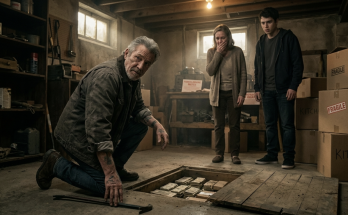
At the very bottom of the cabinet, behind an old tackle box, I noticed a small wooden box.
It was about the size of a paperback book.
There was a brass lock on the front.
I turned it over.
A small envelope had been taped underneath.
My name was written across it.
I opened the envelope.
Inside was a tiny key.
My hands began shaking.
I unlocked the wooden box.
The first thing I found was a stack of photographs.
The second was a small notebook.
The third was another letter.
I recognized Grandpa’s handwriting immediately.
Mark,
If you have found this box, then I hope you are standing in the cabin with a little peace in your heart.
I wish I could be there to see your face.
I smiled.
Then I continued.
I have kept this place for many years. Your grandmother loved it. Your father grew up visiting it. Ryan and Emma spent summers here when they were children.
But over the years, the meaning of this place changed.
For some people, it became something to measure in money.
For me, it remained a place where family could sit together without asking what anyone owned.
I am leaving it to you because you were the one who understood that.
I stopped reading.
My eyes filled with tears.
Then I turned the page.
Inside this box are the photographs I wanted you to have, along with a small notebook containing some of my thoughts about the property and the money I set aside for its care.
There is also a letter from your grandmother that I never gave you.
I looked inside the box again.
Beneath the notebook was a smaller envelope.
It had my grandmother’s name written on the front.
I remembered her only vaguely. She had died when I was young.
I opened the envelope carefully.
The letter was short.
My dear Mark,
Your grandfather tells me you like sitting beside the lake.
I hope you never lose that part of yourself.
Life will sometimes make you believe that the loudest person in the room is the most important. That isn’t true.
Be kind, but remember that you are allowed to say no.
Love, Grandma.
I pressed the letter against my chest.
I had never known she had written it.
For years, I had felt that I was the least important person in my family.
Now, sitting alone in the cabin, I was surrounded by reminders that two people who had loved me had seen something in me that I had struggled to see in myself.
I opened the notebook.
It contained handwritten records of maintenance expenses, property taxes, repairs, and the money Grandpa had set aside.
But near the end, I found several pages describing his concerns about the family’s financial situation.
He had written down dates, amounts, and conversations.
There were references to Ryan asking for money.
There were notes about Dad’s business.
And there was one entry that made me stop.
Ryan visited again today. He wants me to sign papers giving him authority over the cabin. I refused. I told him that the property would go to Mark, exactly as my will states.
He became angry and said Mark would never be able to maintain it.
I told him that maintaining a property is easier than maintaining a person’s character.
I laughed through my tears.
That sounded exactly like Grandpa.
Then I found another entry.
I have spoken to Collins about the money that disappeared from my account. I am disappointed, but I will let the proper people handle it. I will not change my will because of pressure. Mark deserves to know that someone trusted him without expecting anything in return.
I closed the notebook.
I had what I needed.
Not just evidence.
A reminder of why I had to protect the cabin.
I wasn’t going to let the property become another weapon in a family argument.
I was going to take care of it.
The following month brought the first major development.
The financial investigation was moving forward.
The lender formally withdrew from the proposed loan arrangement after the ownership and signature concerns were raised.
The cabin had never been legally transferred to Ryan, and no valid authorization from me existed.
The attorney also helped arrange an independent examination of the disputed signature.
The findings supported my statement that I had not signed the document.
The matter involving the missing money was more complicated.
Records showed that $63,700 had moved through several accounts connected to Ryan’s business and personal finances.
Some transactions had been described as reimbursements or assistance with expenses.
But there was no clear documentation showing that Grandpa had approved all of them.
The authorities began reviewing the evidence.
Ryan stopped calling me.
Dad stopped sending messages.
Emma, however, continued contacting me.
At first, I ignored her.
I wasn’t ready to forgive her.
But she didn’t stop trying.
She sent a message every few days.
Sometimes she apologized.
Sometimes she simply asked whether I was okay.
Eventually, I agreed to meet her.
We met at the same coffee shop where she had given me the documents.
This time, she looked calmer.
She placed a small envelope on the table.
“I found this in my room,” she said.
“What is it?”
“Something Grandpa gave me a long time ago.”
I opened it.
Inside was a photograph of Emma and me as children.
We were sitting on the porch of the cabin, holding ice cream cones.
I remembered that afternoon.
Emma had dropped hers, and Grandpa had given her half of mine.
I smiled faintly.
“Why are you giving me this?”
“Because I don’t deserve to keep pretending that we were always enemies.”
I looked at her.
She took a breath.
“Mark, I was jealous of you.”
That surprised me.
“Jealous of me?”
She nodded.
“I know that sounds ridiculous. Ryan always seemed successful, and I was always trying to impress Dad. But Grandpa treated you differently. He listened to you. He asked about your life. When you visited, he seemed genuinely happy.”
I didn’t say anything.
She continued.
“I thought he was choosing you over us. Instead of asking why, I became resentful. I let Ryan convince me that you were somehow taking something from the family.”
I looked down at the photograph.
“We were children, Emma.”
“I know. But we grew up, and I never changed.”
She wiped her eyes.
“I laughed at you in that lawyer’s office. I called you selfish. I knew Ryan wanted the cabin, and I helped him pressure you.”
She paused.
“I am sorry.”
For the first time, I believed she understood what she had done.
But forgiveness was not something I could give simply because someone finally apologized.
“I appreciate you telling me the truth,” I said.
She nodded.
“I don’t expect you to forgive me immediately.”
“Good.”
She gave a small, sad smile.
“I deserved that.”
We sat quietly for a moment.
Then she asked, “What are you going to do with the cabin?”
I looked out the window.
“Keep it.”
“Forever?”
“I don’t know about forever. But I’m not selling it just because Ryan wants money.”
Emma nodded.
“Grandpa would be happy.”
I folded the photograph and returned it to the envelope.
“I hope so.”
Before we separated, Emma told me she was prepared to cooperate with the investigation and provide the information she had found.
I thanked her.
That was all I could offer at the time.
Several weeks later, Dad asked to meet me.
He sent a message saying he wanted to talk privately.
I agreed, but only after telling Mr. Collins where I would be.
We met at a quiet restaurant.
Dad arrived wearing the same jacket he had worn to the will reading.
He looked older.
Tired.
For the first few minutes, neither of us spoke.
Then he said, “Ryan is in serious trouble.”
I put down my glass.
“I know.”
“The company may have to close.”
I didn’t respond.
“He could lose everything.”
I looked at him.
“Why are you telling me?”
Dad rubbed his forehead.
“Because you’re his brother.”
I felt a familiar anger rising, but I kept my voice calm.
“Dad, when Ryan was trying to take Grandpa’s cabin, did you remember I was his brother?”
Dad looked away.
“That’s not what I wanted.”
“Then what did you want?”
He sighed.
“I wanted to protect the family.”
I shook my head.
“You wanted to protect Ryan.”
Dad didn’t answer.
After a moment, he said, “I made mistakes.”
I waited.
He continued.
“I knew Ryan was borrowing money. I knew his business was struggling. I thought if he could get access to the cabin, he could secure a loan and solve everything.”
“And you thought I should give up my inheritance to make that happen?”
“I thought you would understand.”
I almost laughed.
“Why would I understand? Nobody explained anything to me. You just sat there and agreed with Ryan when he said I didn’t deserve the property.”
Dad lowered his eyes.
“I should have handled things differently.”
“Did you know about the signature?”
He was silent for so long that I already knew the answer.
Finally, he said, “I saw the document.”
“Did you know I hadn’t signed it?”
“I suspected.”
I stared at him.
“You suspected, and you still let Ryan move forward?”
Dad’s eyes became wet.
“I didn’t think it would go this far.”
I looked at the man sitting across from me.
For most of my life, I had wanted him to be proud of me.
I had wanted him to ask about my work, my education, my struggles, and my plans.
I had wanted him to see that I was doing my best.
Instead, he had spent years comparing me to Ryan.
And when Grandpa left me something meaningful, Dad had helped the person trying to take it.
“I don’t hate you,” I finally said.
Dad looked up.
“But I can’t pretend what happened was normal. You let me sit in that office while everyone treated my inheritance like something they could distribute among themselves.”
He swallowed.
“I know.”
“No, Dad. I don’t think you do.”
I paused.
“Grandpa left Ryan and Emma their own inheritances. He left you what he wanted you to have. He left me the cabin. Why couldn’t that have been enough?”
Dad looked down at the table.
“I don’t know.”
For the first time, he didn’t try to defend himself.
I stood.
“I hope you figure it out.”
Before leaving, I said one final thing.
“I am not going to use Grandpa’s property to rescue Ryan from debts he created. And I am not going to sign anything that puts my future at risk.”
Dad nodded slowly.
I walked out.
It hurt.
But it also felt like putting down something heavy I had carried for years.
The investigation continued.
Ryan eventually had to answer questions about the financial transfers and the disputed loan documents.
The evidence was reviewed, including the emails, bank records, the financial authorization forms, the handwritten notes, and the disputed signature.
The matter was handled through the appropriate legal process.
I did not attend every meeting, and I didn’t try to control the outcome.
I simply provided the evidence I had and told the truth.
The proposed loan never went through.
The cabin remained in my name.
The money transferred from Grandpa’s accounts became part of a separate recovery process, and the financial records helped establish which transactions required further action.
Ryan’s business eventually collapsed under the weight of its debts.
He lost several valuable assets and had to deal with the consequences of the financial decisions he had made.
Dad also faced difficult questions about what he knew and when he knew it.
I didn’t celebrate any of it.
I had never wanted my brother to lose everything.
I had only wanted him to stop trying to take what wasn’t his.
There were consequences, and there was no way to pretend otherwise.
But I also learned something important.
Protecting yourself doesn’t mean you have to spend the rest of your life wishing harm on someone else.
It means you stop allowing their decisions to become your responsibility.
Six months after the will reading, I returned to the cabin for the first time since the investigation had begun.
This time, I brought tools, cleaning supplies, and a notebook.
I spent the morning fixing the porch railing.
I replaced two broken window locks.
I cleaned the fireplace and organized Grandpa’s fishing equipment.
In the afternoon, I sat on the old wooden chair beside the lake.
The water was quiet.
A light breeze moved through the trees.
I took Grandpa’s notebook out of my bag and read the last page again.
There was one sentence I hadn’t paid much attention to before.
If Mark ever feels alone, I hope he remembers that this place is proof that someone believed in him.
I looked across the lake.
I had spent so much of my life trying to earn approval from people who had already decided how much I was worth.
I had worked two jobs when I was younger.
I had paid for my education.
I had struggled through difficult months without asking my family for help.
And still, I had somehow believed that I needed their permission to feel proud of myself.
Grandpa had never asked me to prove anything.
He had simply loved me.
That afternoon, I made a decision.
I wasn’t going to sell the cabin.
I wasn’t going to turn it into a rental property or use it to make money.
I would maintain it, keep the photographs, preserve the old furniture, and visit whenever life became too loud.
And someday, if I had children, I would bring them there.
I would teach them how to fish.
I would show them the old photographs.
I would tell them about the man who taught me that being kind didn’t mean being weak.
A year passed.
My life became quieter.
I continued working and began saving money for my own future.
I made a few repairs to the cabin and planted flowers along the porch.
I also started visiting more often.
Sometimes I went alone.
Sometimes Emma joined me.
Our relationship improved slowly, but it was never exactly the same.
She apologized more than once, and I accepted that she was trying to change.
But I also kept boundaries.
We didn’t discuss the investigation every time we met.
We didn’t pretend the past had disappeared.
We simply began building something healthier.
Dad and I spoke occasionally.
Our relationship remained distant.
I no longer expected him to become the father I had wanted when I was younger.
That realization hurt, but it also gave me freedom.
As for Ryan, I heard about him through relatives.
He was no longer running the business he had once been so proud of.
He had moved into a smaller apartment and was trying to rebuild his finances.
For a long time, I wondered whether I should contact him.
Then one afternoon, I received a handwritten letter.
It was from Ryan.
I recognized his handwriting immediately.
I opened it at the kitchen table.
Mark,
I know you probably don’t want to hear from me.
I have spent a lot of time thinking about what happened.
I used to believe that because I was the oldest, I had the right to make decisions for everyone. I convinced myself that I was protecting the family, but I was really protecting my own interests.
I was angry that Grandpa trusted you with the cabin. I told myself you didn’t deserve it because I couldn’t accept that he had chosen differently.
I also know that I hurt you long before the inheritance. I made you feel small because it made me feel important.
I don’t expect you to forgive me.
I just wanted to say that I was wrong.
Ryan.
I read the letter twice.
I placed it on the table.
I didn’t immediately call him.
I didn’t rush to forgive him.
But I also didn’t feel the same anger I had felt when he stood outside my apartment shouting.
A few weeks later, I sent him a short reply.
I told him that I appreciated his honesty.
I told him that I hoped he would rebuild his life.
And I told him that if we ever had a relationship again, it would have to be based on respect and honesty.
I didn’t offer him money.
I didn’t offer him the cabin.
I didn’t promise that everything would return to the way it had been.
Some relationships need time.
Some wounds need more than an apology.
And some doors can only be opened when the people standing outside finally understand why they were closed.
One Sunday morning, I invited Emma to the cabin.
We sat on the porch drinking coffee.
She looked toward the lake and smiled.
“Grandpa would have loved this weather.”
“He always said the lake was best in the morning.”
She laughed.
“Remember when he used to wake us up at five?”
“I remember you refusing to get out of bed.”
“I was eight!”
We laughed.
For the first time in years, the conversation felt natural.
After a while, Emma looked at me.
“Do you ever wish Grandpa had left the cabin to all of us?”
I thought about it.
“No.”
She looked surprised.
“Really?”
“I wish we had all treated each other better. I wish Ryan hadn’t become so obsessed with money. I wish Dad had stood up for what Grandpa wanted. And I wish you hadn’t joined them in making me feel like I didn’t belong.”
She nodded.
“But the cabin itself?”
I looked toward the water.
“No. Grandpa made his decision for a reason. I don’t need to feel guilty about respecting it.”
Emma smiled sadly.
“I think he knew you would take care of it.”
I looked at the old fishing cabinet visible through the window.
“I hope I do.”
That evening, after Emma left, I walked down to the lake.
I carried two fishing rods.
One was mine.
The other had belonged to Grandpa.
I sat on the wooden dock and watched the sun begin to disappear behind the trees.
For a long time, I simply listened to the water.
Then I remembered the first time Grandpa brought me there.
I had been a teenager, frustrated with school and convinced that everyone else was moving ahead faster than I was.
I had told him that I felt like the least important person in the family.
He hadn’t laughed.
He hadn’t told me I was being dramatic.
He had simply handed me a fishing rod.
Then he said:
“Mark, don’t spend your whole life measuring yourself against people who aren’t even looking at the same finish line.”
At the time, I hadn’t understood.
Now I did.
I had spent years waiting for Ryan to respect me.
Waiting for Emma to stop comparing us.
Waiting for Dad to recognize my efforts.
Waiting for someone to tell me I was enough.
But I didn’t need to wait anymore.
Grandpa had already told me.
I was enough.
And the cabin wasn’t proof that I had won a family argument.
It was proof that someone had seen me clearly, loved me without conditions, and trusted me with something meaningful.
I looked at the photograph I had brought from the fishing cabinet.
Grandpa and I were standing beside the lake.
He was smiling.
I was holding a fish.
I placed the photograph back in my pocket.
Then I looked at the water and whispered:
“I kept it, Grandpa.”
The breeze moved gently through the trees.
“I didn’t let them take it.”
I sat there until the sky turned dark.
And for the first time since the will reading, I felt completely at peace.
My family had spent so much time arguing over what Grandpa left behind that they had forgotten what he had actually taught us.
Money could disappear.
Businesses could fail.
Houses could be sold.
But the way you treated people would remain long after everything else was gone.
Ryan had wanted the cabin because he believed it could save him financially.
Dad had wanted it because he believed it could solve a family problem.
Emma had wanted it because she thought everything Grandpa owned should be divided equally.
But Grandpa had given it to me for a different reason.
He wanted me to have a place where I never had to prove my worth.
And that was exactly what I intended to preserve.
THE END.
A final lesson
Sometimes the greatest inheritance isn’t money, property, or possessions. It’s knowing that someone believed in you when everyone else made you question your worth.
And sometimes protecting what someone leaves you means having the courage to say no—even when the people asking are your own family